The Dangers of Ignoring Brake Noises
Neglecting brake noises poses significant risks to vehicle safety and functionality. Audible signals, such as squeals or grinding, often indicate worn pads or rotor issues. These problems, if left unaddressed, can compromise braking efficiency, increasing stopping distances and jeopardizing control in critical situations. Additionally, overlooking these noises may result in extensive damage to the braking system, leading to costly repairs. This highlights the importance of identifying and resolving brake-related anomalies promptly.
Understanding Common Brake Noises
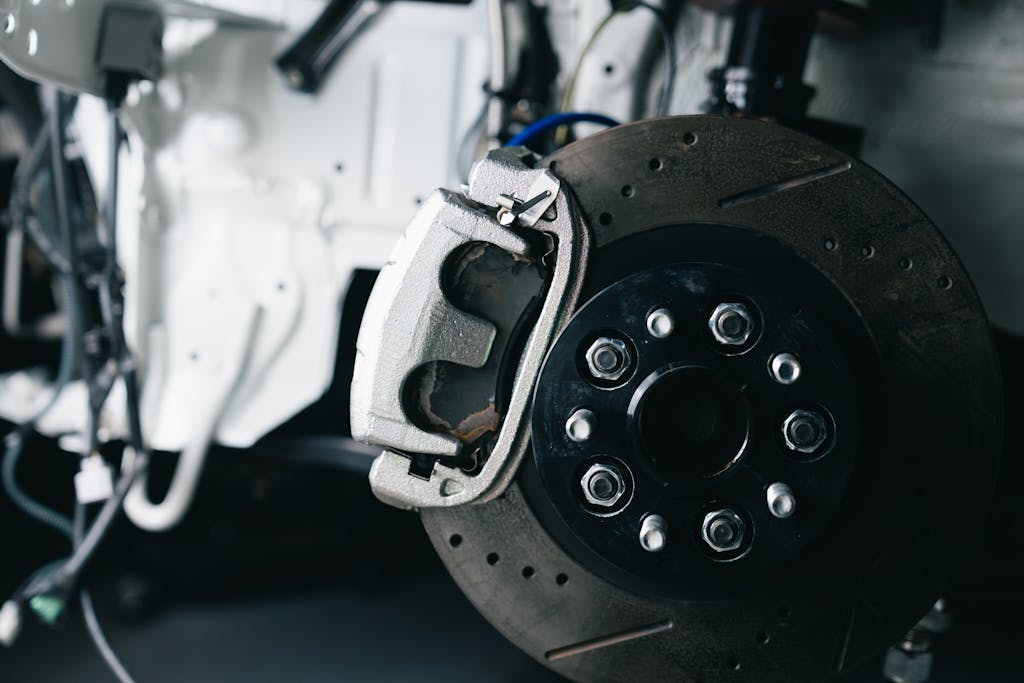
Brake noises, often dismissed as mere nuisances, are pivotal indicators of a vehicle’s braking system’s health. The sounds emitted during braking can reveal critical information about the brake pad condition and rotor wear assessment. High-pitched squeals may signal worn brake pads, often caused by the wear indicator contacting the rotor surface. Grinding noises, on the other hand, suggest metal-to-metal contact due to severely worn pads, necessitating immediate attention. Additionally, thumping sounds could indicate rotor irregularities, such as warping or uneven wear, affecting braking efficiency. Each noise variation provides diagnostic clues essential for maintaining ideal brake performance. By systematically analyzing these auditory cues, technicians can effectively gauge the braking system’s integrity and preemptively address potential issues before they escalate.
The Risks of Overlooking Squeaky Brakes
Ignoring squeaky brakes can drastically compromise vehicular safety and lead to costly repairs. Squeaky noises often indicate issues with proper pad installation or material wear. Misaligned pads or inadequate installation can lead to uneven pressure distribution, impacting braking efficiency. Over time, this misalignment may cause increased friction, accelerating wear on both pads and rotors. Furthermore, incorrect pad installation can result in vibrations, further exacerbating noise and reducing brake effectiveness.
Driving habits impact the longevity of brake components greatly. Frequent hard braking or carrying excessive loads contributes to premature pad wear. These habits generate excessive heat, potentially glazing the pad surface, leading to reduced friction and increased noise. Addressing squeaky brakes promptly guarantees optimal performance and prevents extensive damage to the braking system.
Grinding Sounds: A Sign of Imminent Danger
Grinding sounds emanating from the braking system are often an unequivocal indicator of severe mechanical issues that demand immediate attention. When brake pads wear down to their backing plates, metal-on-metal contact occurs, producing a grinding noise. This situation can be exacerbated by brake pad glazing, a condition where excessive heat causes the pad surface to harden, reducing its effectiveness. Additionally, brake fluid contamination—often due to moisture ingress—can impair hydraulic efficiency, compromising braking performance. Such issues, if unaddressed, may severely damage the rotor and calipers, leading to costly repairs. Immediate inspection by a qualified technician is paramount to prevent further deterioration. Ensuring regular maintenance and prompt attention to grinding noises is essential for vehicle safety and optimal braking function.
Causes of Persistent Brake Squeals
While grinding noises indicate severe brake system issues, persistent brake squeals often point to different underlying causes that, though less immediately hazardous, still require attention. Uneven pad wear is a frequent contributor to these high-pitched sounds. When brake pads wear inconsistently, they fail to make uniform contact with the rotor, resulting in vibrations that manifest as squealing. This can arise from misaligned calipers or defective hardware. Rotor imperfections, such as warping or scoring, further contribute to persistent squeals. These irregularities disrupt the smooth operation of the braking system, leading to the aforementioned vibrations. Additionally, the presence of dust or debris between the pad and rotor can exacerbate noise. Addressing these issues promptly guarantees optimal braking performance and extends component lifespan.
How Ignoring Noises Leads to Costly Repairs
Neglecting unusual brake noises can swiftly escalate into significant financial burdens. Persistent sounds often indicate underlying issues such as brake pad wear or compromised rotor condition. Brake pads serve as the initial friction surface, and their deterioration can lead to metal-on-metal contact. This contact not only exacerbates noise but also damages the rotors, leading to grooves, warping, or cracking. When rotor condition declines, it necessitates either resurfacing or complete replacement, both of which incur higher costs compared to timely pad changes. In addition, allowing brake pad wear to continue unchecked increases the risk of caliper damage. Calipers, being vital components that house the brake pads, can seize or malfunction when exposed to ongoing stress, further inflating repair expenses.
The Impact of Brake Issues on Vehicle Performance
Brake issues considerably compromise vehicle performance, affecting both safety and efficiency. The condition of brake pads and rotors plays a pivotal role in this dynamic. When brake pad wear progresses unchecked, it leads to increased stopping distances and diminished braking responsiveness. This compromise not only affects the operational efficacy of the braking system but also places additional strain on the vehicle’s suspension and steering components.
Moreover, the rotor condition directly influences the smoothness of braking. Warped or uneven rotors can cause vibrations, leading to an uncomfortable driving experience and further wear on associated parts. Ensuring essential brake pad and rotor maintenance is essential to maintaining vehicle efficiency, as these components are integral to converting kinetic energy into thermal energy, consequently facilitating effective deceleration.
Safety Hazards Associated With Faulty Brakes
Faulty brakes present significant safety hazards by increasing stopping distances, which directly compromise a vehicle’s ability to halt effectively in emergency situations. These defects heighten the risk of brake failure, potentially leading to a complete loss of braking capability and subsequent loss of vehicle control. The culmination of these issues can result in collision scenarios, posing serious threats to both occupants and surrounding traffic participants.
Increased Stopping Distances
Increased stopping distances present a significant safety hazard associated with malfunctioning brakes. When brake components are compromised, they result in reduced braking power, severely affecting vehicle control during deceleration. This degradation in braking efficiency leads to extended stopping times, especially in critical situations where immediate halts are necessary. The braking system’s inability to generate adequate friction between brake pads and rotors delays the vehicle’s response to driver inputs. Consequently, the risk of collisions escalates, particularly in high-traffic environments or adverse weather conditions where stopping distances are naturally longer. Drivers may miscalculate the distance required to stop safely, leading to potential accidents. Therefore, addressing any brake noise promptly is essential to maintaining ideal braking performance and ensuring road safety.
Risk of Brake Failure
When left unaddressed, persistent brake noises can be harbingers of more severe issues, particularly the risk of brake failure. Brake pad wear is a critical factor in this equation. As brake pads thin, they lose their ability to generate sufficient friction, leading to decreased braking effectiveness. Concurrently, rotor thickness concerns arise when excessive wear causes rotors to fall below their minimum thickness specifications. This diminishes their heat dissipation capability, potentially causing warping and further degradation of the braking system. Together, these issues can culminate in a catastrophic brake failure. The compromised structural integrity of both brake pads and rotors can result in a complete loss of braking power, presenting significant safety hazards to vehicle occupants and other road users.
Potential Collision Scenarios
Numerous potential collision scenarios arise from compromised braking systems, posing significant risks on the road. When brake performance deteriorates, the risk of potential rear end collisions increases dramatically. Inadequate braking distance due to worn brake pads or fluid leaks results in insufficient stopping power, leading to unavoidable impacts with vehicles ahead. Moreover, faulty brakes can cause a sudden loss of control, especially during emergency maneuvers. This loss of control may result from uneven brake application, causing the vehicle to skid or veer unexpectedly. Such scenarios often occur on wet or slippery surfaces, exacerbating the hazard. In both cases, compromised brakes endanger not only the vehicle occupants but also other road users, underlining the critical need for timely brake maintenance and repair.
Preventive Measures to Address Brake Noises
Implementing regular brake inspections is pivotal in identifying wear patterns and potential issues before they escalate into serious problems. Immediate diagnosis of unusual brake noises guarantees prompt identification of underlying mechanical faults, reducing the risk of brake failure. Both strategies are indispensable to maintain ideal braking performance and guarantee vehicular safety.
Regular Brake Inspections
Although often overlooked, regular brake inspections are a critical preventive measure to address and mitigate brake noises. These inspections involve a systematic evaluation of brake components to guarantee optimal performance. Key aspects include brake fluid maintenance and adherence to a pad replacement schedule. Brake fluid maintenance entails checking fluid levels and quality, as contaminated or low fluid can lead to compromised braking efficiency and noise generation. A strict pad replacement schedule is essential to prevent excessive wear, which is a primary source of squealing. During inspections, technicians assess pads for thickness and wear patterns, ensuring timely replacements. Additionally, they examine rotors for warping or damage. Regular inspections thus play an instrumental role in maintaining silent, efficient braking systems.
Prompt Noise Diagnosis
How can drivers guarantee the longevity and reliability of their braking systems? By implementing prompt noise diagnosis techniques as part of proper brake maintenance practices. Identifying the source of abnormal brake sounds, such as squealing or grinding, is vital. These noises often indicate underlying issues like worn-out pads or compromised rotors. An effective noise diagnosis involves systematic inspection of components, including calipers and brake lines, to verify they function ideally. Utilizing advanced diagnostic tools can aid in precisely identifying the issue, allowing for timely corrective action. Proactive diagnosis not only prevents further damage but also enhances the overall safety and performance of the vehicle. Consequently, integrating noise diagnosis into routine maintenance is essential for preserving brake system integrity.
When to Seek Professional Brake Inspection
A timely professional brake inspection is imperative for maintaining vehicle safety and performance. Adhering to a brake maintenance schedule is essential to prevent potential malfunctions. Recommended inspection intervals typically suggest that brakes be checked every 10,000 to 20,000 miles, depending on manufacturer guidelines and driving conditions. Signs indicating the need for a professional inspection include persistent squealing, grinding noises, or a noticeable decrease in braking efficiency. Vibrations during braking or a spongy brake pedal also warrant immediate attention. A skilled technician can accurately diagnose issues, ensuring components such as brake pads, rotors, and calipers are functioning correctly. Ignoring these signals may lead to severe damage and increased repair costs, compromising vehicle safety. Regular inspections are vital to extend brake system longevity.
Frequently Asked Questions
How Can Weather Conditions Affect Brake Noises?
Weather conditions can affect brake noises through varying humidity levels, which may cause brake components to expand or contract, and extreme temperature shifts, leading to changes in friction material properties, potentially increasing noise due to altered brake performance.
What Role Does Driving Style Play in Brake Wear?
Driving style markedly impacts brake wear. Aggressive driving habits, such as hard braking and rapid acceleration, accelerate brake deterioration. In contrast, proper brake maintenance and cautious driving can prolong brake lifespan, enhancing vehicle safety and performance.
Can Brake Noises Affect Fuel Efficiency?
Brake noises can indirectly affect fuel efficiency, as unresolved issues may lead to increased friction and resistance. Regular brake pad maintenance and timely brake pad replacement are vital to guarantee ideal vehicle performance and fuel economy.
Are Certain Car Models More Prone to Brake Noise?
Yes, certain car models are more prone to brake noise. This often depends on the brake pad composition and brake rotor materials used, as some combinations can exacerbate vibrations, leading to increased noise during braking operations.
How Does Brake Fluid Condition Relate to Brake Noises?
Brake fluid condition impacts brake pad wear patterns and overall brake efficiency. Regular brake system maintenance schedules guarantee ideal fluid condition, preventing air and moisture contamination, which can cause noise by affecting brake pad engagement and performance.